$URANUS
$URANUS is paired with tokenized $SPCX on Robinhood Chain - the seventh planet, hitched to the rocket company that might actually get there.
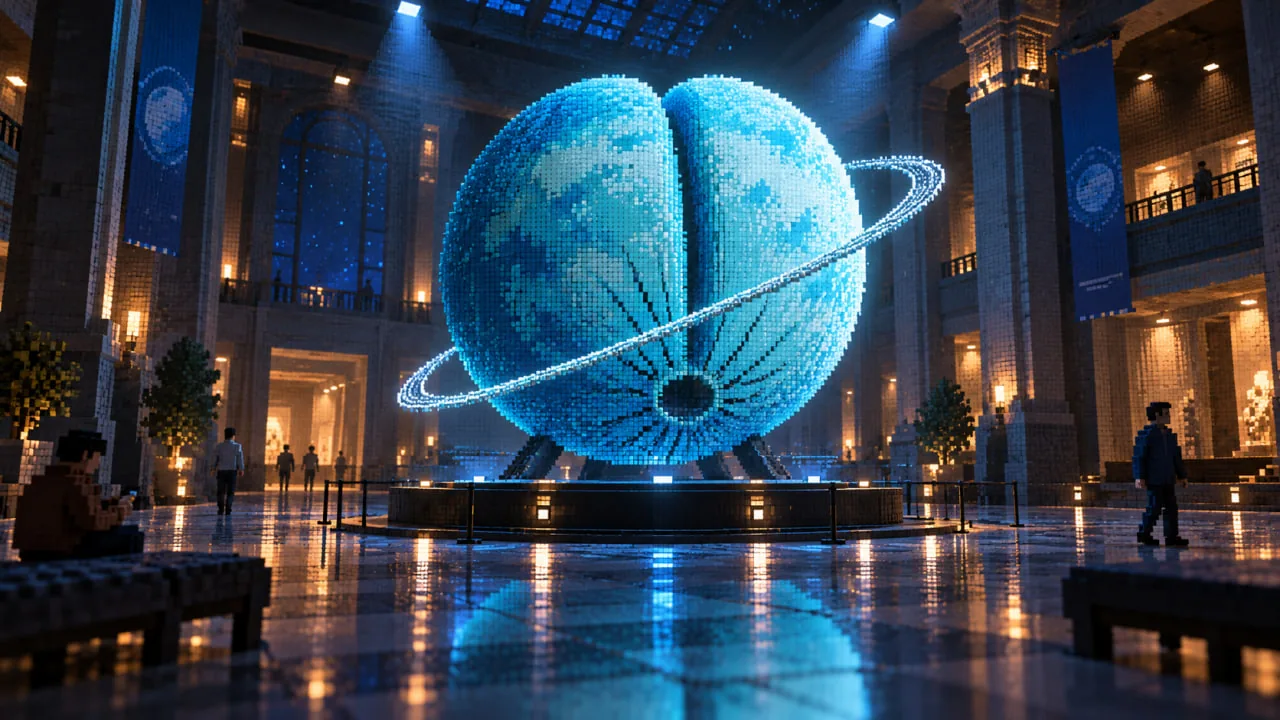
$URANUS is paired with tokenized $SPCX on Robinhood Chain - the seventh planet, hitched to the rocket company that might actually get there.
Seventh planet. First one ever found with a telescope. Coldest in the solar system, and two hours forty minutes away at the speed of light. The rest is below, and the ones marked FACT are not jokes.
If I were to bury myself in space, I’d bury myself in Uranus.
William Herschel played the organ for a living. He wrote two dozen symphonies, taught music in Bath, and built his own telescopes on the side, because the ones he could buy were not good enough.
On the night of 13 March 1781 he pointed one of them at the sky from his back garden and found something that was not a star. He filed it as a comet. It was a planet, and the first one anybody ever discovered: every other had been hanging there in plain sight since the beginning of people. The known solar system doubled in size overnight.
He wanted to call it Georgium Sidus, after King George III, who promptly handed him a pension so he could quit music. The rest of Europe declined to name a planet after an English king. Johann Bode proposed Uranus instead, and by 1850 everyone had given in.
His sister Caroline worked beside him through all of it, found eight comets of her own, and became the first woman in England paid to do science.
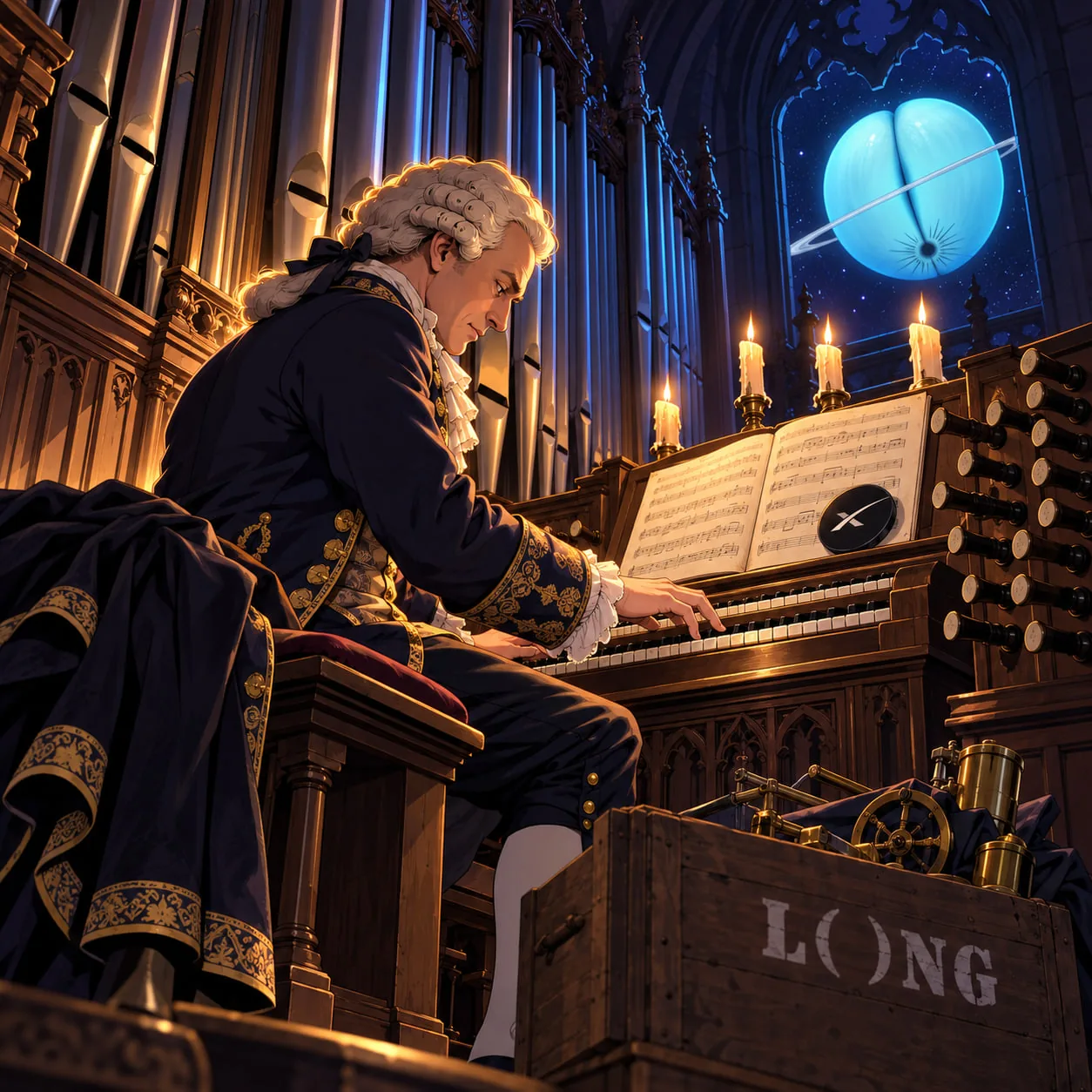
He was an organist first. The telescope was the hobby that got away from him.
Every other planet borrows its moon names from Greek and Roman gods. Uranus took its from Shakespeare and Alexander Pope, and it has been collecting them ever since: 28 known so far, and they keep finding more. Five are big enough to have a face.
Looks assembled from spare parts. Carries Verona Rupes, a cliff around 20 km tall, the highest known anywhere. Step off it and you would fall for ten minutes.
The bright one, cut through by deep canyons that were flooded from below. The only name on this list both poets used.
The dark one. Almost featureless, except for a ring of bright material nobody has explained, nicknamed the fluorescent cheerio.
The largest, and one of the two Herschel found himself in 1787, six years after the planet.
The outermost of the big five, scarred all over, with a mountain on its edge that rises 11 km out of the dark.
Earth leans 23 degrees. Uranus leans 98, which means it does not spin like a top, it rolls like a barrel. The best explanation is that something roughly the size of a planet hit it early on and knocked it over. Its rings and its moons are tipped to match, so whatever happened, it happened before they settled into place.
Voyager 2 is the only spacecraft that has ever been to Uranus. It arrived on 24 January 1986, passed about 81,500 km above the cloud tops, and the close part of the encounter was over in a few hours. In that window it found ten moons and two rings nobody knew were there.
Four days later Challenger broke up on ascent, and the pictures from Uranus left the front pages. The probe kept going and is still transmitting from interstellar space, decades past the mission it was built for.
There is a catch to everything we learned. In 2024 researchers went back through the data and found that Voyager 2 flew through an unusual blast of solar wind that had squashed the planet’s magnetic field. Almost everything we think we know about it may be a snapshot of a bad day.
An arcade lunar lander. Put the module down on the surface, enlist with Uranus Corp, earn a rank. Free, in the browser, nothing to install.